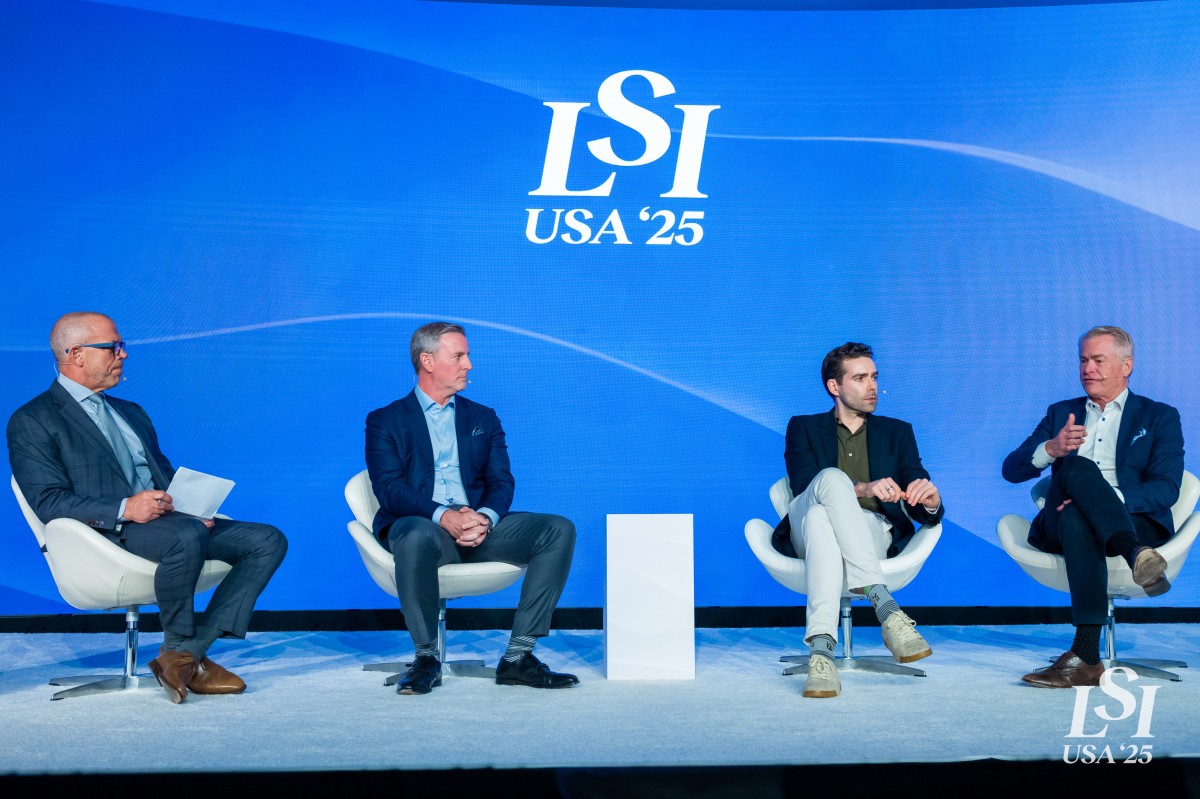
At LSI USA ’25, the question wasn’t whether soft tissue robotics will reshape surgery, but how. In a panel titled Soft Tissue Robotics: Open Architecture or Closed System? The Road Forward, industry leaders tackled one of the field’s most urgent debates: whether future surgical platforms should embrace openness or remain tightly integrated.
Moderated by Joe Mullings of The Mullings Group, the conversation spanned technical ecosystems, innovation bottlenecks, surgeon preferences, and investment models. The verdict? There’s no single answer, but the stakes for patients, startups, and strategics have never been higher.
Defining the Debate in Soft Tissue Robotics
To level-set the discussion, Mullings began by asking the panelists to define what “open” and “closed” mean in the context of soft tissue robotics.
Greg Roche, CEO of Distalmotion, put it simply: “Choice is the difference between open and closed. When you close something down, you limit the offering in the long term.” Roche argued that open systems allow surgeons and hospitals to pick best-in-class technologies across the surgical stack, building a custom ecosystem instead of being locked into a single vendor.
Scott Huennekens, former CEO of Verb Surgical and longtime digital surgery leader, offered a broader systems view. “I never even liked the term ‘robotic surgery.’ I always preferred ‘digital surgery,’” he said. “It’s not just about the robot. It’s about instruments, connectivity, data, analytics, and precision guidance, all working together.”
Oliver Keown, CEO of Oath Surgical and former founder and leader of Intuitive Ventures, added that the real goal is to deliver surgical value across the entire continuum of care. “I don’t know if any systems today are truly open or truly closed,” Keown said. “What matters is how technologies align with the outcomes and efficiencies that health systems and surgeons care about.”
Innovation, Investment, and the Open vs. Closed Dilemma
The panelists agreed that the rapid innovation curve in soft tissue robotics makes the open versus closed conversation more pressing than ever.
“We’re in a very high innovation curve,” said Mullings. “Look at what’s happening in imaging, AI, telepresence, navigation. If you try to bundle all of that into a closed system, you lose that optionality.”
Huennekens cited On Target Laboratories, where he sits on the board, as an example. “If their cancer-targeting fluorescence only worked on one robot, we’d be limiting cancer care,” he said. “Instead, they’re making it platform-agnostic. That’s what accelerates progress.”
Roche noted the financial upside of openness as well. “Trying to master six or seven verticals in-house is nearly impossible and incredibly expensive,” he said. “From an investment perspective, it’s better to see focused innovation from multiple companies that can plug into a shared ecosystem.”
Why Sites of Care Should Drive Decisions
The conversation shifted to where soft tissue robotics is headed, especially with the migration of procedures from hospitals to ambulatory surgical centers (ASCs).
“The future of surgery will be outpatient until proven otherwise,” said Keown. “Complex care already happens in ASCs, and business models, access strategies, and technologies that enable that will thrive.”
Roche echoed the importance of adaptability. “Form factor matters. Complexity matters,” he said. “We’re hearing about patient flow being determined by where the robot sits, not where the patient should be. That’s a paradox we need to solve.”
Keown emphasized that technologies must meet ASC-specific needs like cost, workflow simplicity, and capital constraints. “Surgeons and operators want quality, yes, but also growth, efficiency, and new revenue streams,” he said. “They need tools that align with those priorities.”
Open Architecture and the Innovation Flywheel
Mullings asked what open architecture means for ongoing medtech innovation and capital flow into soft tissue robotics. Huennekens compared hospitals to shopping malls, describing them as high-cost, obsolete delivery models, and argued that surgery is moving toward smaller, tech-enabled care environments.
“You need technology that fits that model,” he said. “Smaller, faster, cheaper. Open platforms let us optimize for those parameters.”
He also noted that investment follows opportunity. “When you have more platforms and developers building apps or imaging agents that can plug in anywhere, you create a multiplier effect. More investment leads to more innovation, which leads to better outcomes.”
The Future of Soft Tissue Robotics: Convergence, Not Control
As the panel wound down, Mullings posed the final question: If you had to bet, would the future be open or closed?
Roche didn’t hesitate. “Open. If we want to push innovation, it can’t be closed. I see a much higher prevalence of open systems 10 years from now.”
Huennekens leaned slightly toward the middle ground. “I think it’ll be a mix. There will be more open elements than we’ve seen historically. That’s where the opportunity lies.”
Keown offered a reframing: “In 10 years, we won’t be talking about whether robotics is open or closed. We’ll be talking about vertically integrated surgical care models that span sites of care. And we’ll be talking about the rest of the healthcare system.”
Final Thoughts
The soft tissue robotics market is expanding rapidly, but so are its challenges. Closed systems may promise seamless integration, but they risk slowing innovation and limiting access. Open platforms invite more players, more competition, and more progress. As Roche put it, “It shouldn’t be about the robotic company. It should be about the surgeon, the patient, and the procedure.”
If the goal is better outcomes for more patients, the road forward will require open minds and open systems.

-Joe-Mullings,-Andrew-ElBardissi,-Ramin-Mousavi,-Addie-Harris,-and-Josh-Makower.png)